Insurability Is the New Curb Appeal: How Risk Is Quietly Repricing American Homes

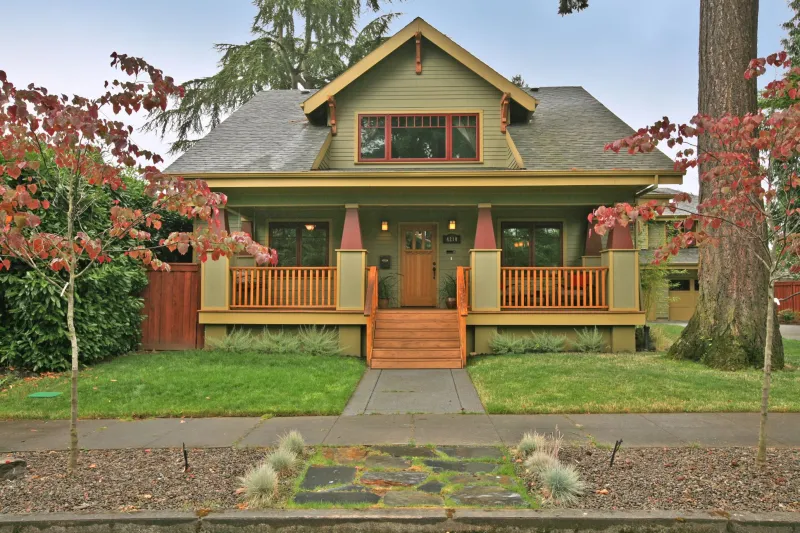
Photo: Granger Meador, Public domain, via Wikimedia Commons
For most of the last thirty years, homeowners treated insurance like a formality — a line item tucked between the mortgage payment and the property tax escrow, signed once a year and forgotten. That era is over. In 2026, the cost and, more importantly, the availability of coverage has become one of the loudest signals in residential real estate. A house can be beautiful, well-priced, and in the right school district, and still be genuinely difficult to insure. That is a new kind of problem, and it does not show up in the listing photos.
The number that reorders your priorities
When you run the math on a home you plan to keep for a decade, insurance belongs in the same conversation as the mortgage rate and the tax bill. Not as an afterthought. A premium that jumps 40 percent in two renewals does real damage to a household budget, and it also changes what your home is worth to the next buyer, because that buyer will run the same numbers.
This is the part that catches people off guard: insurability is becoming a market signal the way curb appeal used to be. Buyers in fire-prone foothills, hail corridors, and coastal flood zones are learning to ask for a quote before they ask for a walkthrough.
What underwriters are actually looking at now
You will never see the full scoring model, but the inputs are not mysterious. Most carriers in 2026 are weighing some combination of the following:
- Roof age and material. An aging roof is the single most common reason a policy gets declined or pushed to actual cash value rather than replacement cost. If your roof is past 15 years in a hail state, expect scrutiny.
- Claim history on the property itself, not just on you. Insurers pull a loss history report on the address. A previous owner's two water-damage claims follow the house, not the person.
- Proximity to risk. Wildfire fuel models, flood zones, distance to the coast, and increasingly, extreme heat and freeze exposure.
- Systems age. Water heater, electrical panel, plumbing, HVAC. A 1970s panel with a known failure reputation is a real underwriting problem, not a cosmetic one.
- Mitigation features you can prove. Impact-rated windows, a Class A roof, ember-resistant vents, a sump pump with battery backup, a monitored leak sensor. Proven is the operative word.
- Your credit-based insurance score and prior claims. This varies by state and is capped or banned in some, but it is still a factor in most of the country.
Documentation is the cheapest upgrade you will ever make
Here is the frustrating truth: plenty of homeowners have already done the expensive work and get no credit for it because they cannot prove it. Underwriters do not reward good intentions.
Build a home file — digital, backed up, and boring on purpose. Photograph the roof from a ladder or a drone shot after installation, keep the contractor invoice with the permit number, save the wind mitigation or four-point inspection report if your state uses one, and log every system replacement with a date and model number. When your renewal arrives with a number you do not like, that file is what lets an agent argue your case to an underwriter instead of shrugging.
Upgrades that move the needle, and ones that mostly do not
If your goal is insurability rather than aesthetics, spend in this order:
- Roof and water intrusion. These drive the largest share of claims. A new roof and a properly sealed envelope beat almost everything else.
- Electrical and plumbing remediation. Old panels and polybutylene or galvanized supply lines are declinable conditions in some markets.
- Wildfire hardening, if you are in a wildland-urban interface. Ember-resistant vents, noncombustible siding in the first five feet, and defensible space clearing are frequently rewarded.
- Water leak detection and automatic shutoffs. Cheap relative to the damage they prevent, and increasingly recognized by carriers.
- Cosmetic upgrades. A kitchen remodel is lovely. It will not lower your premium, and it may raise your dwelling coverage limit, which raises your premium.
Shopping around is a skill, not a betrayal
Loyalty to an insurer is not a virtue in a repricing market. Work with an independent agent who can quote multiple carriers, and re-shop every two to three years or after any major change — a new roof, a new claim, a refinance. Compare replacement cost versus actual cash value carefully, because a policy that looks cheap is often just covering less. And when you raise a deductible to control the premium, do it with the emergency fund to match, not as wishful thinking.
If the standard market has closed its door, state-backed insurers of last resort and surplus lines carriers still exist. They are more expensive and less generous, and for some households they are the honest answer for a few more years.
The question underneath all of it
Retrofitting makes sense when you love the house and the risk is manageable — when a roof, some defensible space, and better documentation bring you back into the standard market. It stops making sense when the fundamental geography is the problem and every dollar you spend buys only a temporary reprieve.
That is not a decision to make in a panic the week a renewal notice arrives. Make it in the calm months, with three quotes in hand, a home file built, and a clear-eyed sense of what the house will cost you over the next ten years — not just what it cost you on closing day. Insurability is not a footnote to homeownership anymore. It is part of the price of the house.