When Good Neighborhoods Go Sideways: Reading the Signs Before Your Community Leaves You Behind
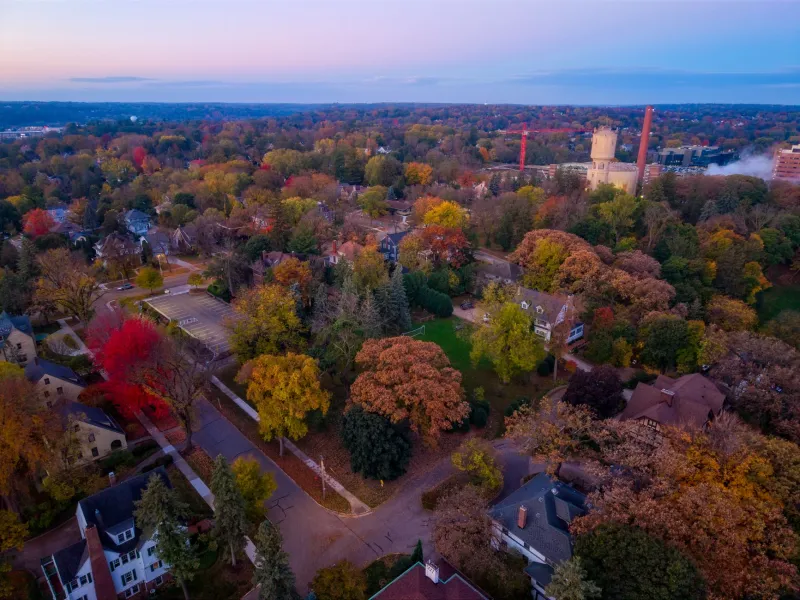
You picked your neighborhood carefully. Maybe you walked the streets on a Sunday morning, grabbed coffee at the local spot on the corner, noticed the well-kept yards and the kids riding bikes. It felt right. It was right — at least for a while.
But neighborhoods don't stay frozen in time just because you love them. They shift. Sometimes slowly, sometimes fast. And if you're not paying attention, you can end up holding a "forever home" in a community that no longer fits your life — or your investment.
The good news? Neighborhood change almost always leaves a paper trail. You just have to know what you're reading.
Neighborhoods Move in Cycles — And Most of Us Miss the Early Turns
Urban planners and real estate economists have long described neighborhood change as a cycle: growth, stability, decline, and either revitalization or continued deterioration. The tricky part is that most homeowners only notice the change when it's already well underway.
A neighborhood that felt vibrant five years ago might be quietly entering a stagnation phase. Businesses that gave the area its personality start closing. The elementary school your kids attend loses a few teachers and adds a few portables. That park gets a little less maintained every summer. None of these things is a disaster on its own — but together, they're telling you something.
On the flip side, a neighborhood you wrote off as "not quite there yet" might be in the early stages of real revitalization. New transit infrastructure, a wave of younger buyers renovating older homes, a coffee shop or two where there used to be nothing — these aren't accidents. They're signals.
The key is learning to read both directions honestly, without letting your emotional attachment to your home cloud the picture.
The Five Signals Worth Watching
1. What's happening to the local retail and dining scene
Businesses follow rooftops and income. When a neighborhood starts attracting the kind of retail that caters to higher disposable income — think local boutiques, specialty grocery stores, sit-down restaurants — it's usually a sign that demographics are shifting upward. When longtime local businesses start closing without replacement, or when vacancies stay empty for months, that's a flag worth noting.
2. School quality trends
For families especially, school district performance is one of the most powerful drivers of neighborhood desirability. Check your local district's annual report cards and enrollment trends over the past five years. A school that's losing enrollment or seeing teacher turnover is often a symptom of broader community stress. A school that's adding programs and improving test scores? That's a neighborhood on the rise.
3. Infrastructure investment — or the lack of it
Pay attention to where your city or county is spending money. New sidewalks, road repaving, park upgrades, and public transit expansions are almost always precursors to increased property values. Conversely, deferred maintenance on public infrastructure — crumbling roads, aging utilities, neglected green spaces — suggests a municipality that's stretched thin or has quietly deprioritized your area.
4. Who's buying (and who's leaving)
You don't need to stalk your neighbors to notice demographic shifts. Are the houses on your block selling quickly, with multiple offers? Or are they sitting for months and selling below asking? Are longtime residents moving away in clusters? Are rentals multiplying? These patterns tell you a lot about whether the people with options are choosing your neighborhood — or choosing to leave it.
5. Crime and safety perceptions
Actual crime statistics matter, but so does perceived safety — because perception drives real estate behavior. Check your local police department's public crime data and compare year-over-year trends. A gradual uptick in property crime, even without violent incidents, tends to suppress buyer interest and accelerate the exit of long-term residents.
When Change Is Actually an Opportunity
Here's something the doom-and-gloom crowd misses: neighborhood change isn't inherently bad for homeowners who are paying attention. In fact, some of the best real estate decisions people make are staying through a transition period — and coming out the other side with dramatically appreciated equity.
If your neighborhood is in early-stage revitalization, the smart move might be to lean in. That means investing in your property rather than letting it slide, getting involved in local community organizations, and being patient with a timeline that rewards those who stuck around.
But that calculation only works if the fundamentals are moving in the right direction. If the signals you're seeing suggest decline rather than transition, doubling down on a property in a deteriorating market is a different story entirely.
How to Have an Honest Conversation with Yourself
The hardest part of this whole exercise isn't gathering data — it's being honest about what you find. We're all prone to confirmation bias when it comes to our homes. We notice the new restaurant that just opened and ignore the three that closed. We focus on the neighbor who just renovated and overlook the three houses with overgrown lawns.
A useful exercise: imagine you're a buyer considering your neighborhood for the first time. Walk your streets with fresh eyes. Drive the main commercial corridor. Visit the park on a weekday afternoon. Would you buy here today, knowing what you know?
If the honest answer is yes — great. Keep investing, keep engaging, keep building roots.
If the honest answer is "I'm not sure" or "probably not," that's not a reason to panic. But it is a reason to start thinking strategically about your next move before the market makes the decision for you.
The Bottom Line for Home Lovers
A neighborhood is never just a backdrop for your home — it's an active ingredient in your quality of life and your financial picture. The communities we love are worth fighting for, worth investing in, and worth paying attention to.
But loving a place doesn't mean ignoring what it's telling you. The homeowners who thrive over the long haul are the ones who stay curious, stay informed, and aren't afraid to act on what they learn — even when the answer is harder than they hoped.
Your home deserves a neighborhood that's growing alongside it. Make sure you're checking in on that relationship regularly.