The People Next Door Matter More Than You Think: How to Read a Neighborhood's Human Side Before You Buy
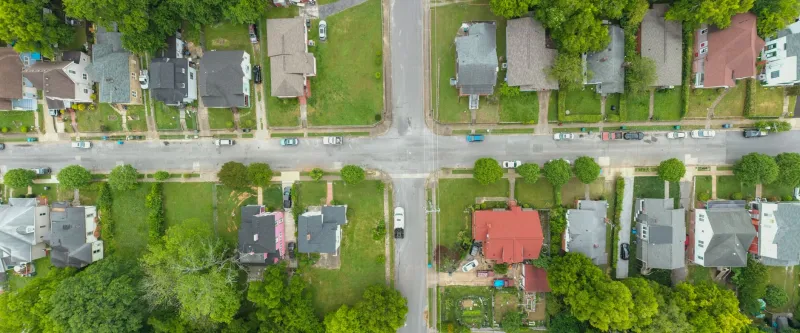
You've run the numbers. You've cross-referenced the school district ratings, clocked the commute on a Tuesday morning, and driven the neighborhood at least twice on Google Street View. But here's the thing almost nobody talks about at the closing table: the people who'll live twenty feet from your bedroom window.
Neighbors can make or break a home. Not the structure itself — the experience of living in it. And yet most buyers spend more time researching countertop materials than they do thinking about whether the folks next door will be a genuine fit for their lifestyle. At Home Lover Club, we talk a lot about what makes a house feel like home — and honestly, the humans around you are a huge part of that equation.
So let's get into it. Here's how to actually evaluate the people, not just the proximity.
Why Neighbor Compatibility Deserves a Spot on Your Checklist
It's easy to dismiss this as something you'll just figure out later. But consider how much of your daily life is shaped by the people immediately around you. Whether it's the volume of weekend parties, how well the shared fence line is maintained, the vibe at the end of the driveway when you're grabbing your mail — all of it adds up.
Research consistently shows that social connectedness in a neighborhood is one of the strongest predictors of long-term housing satisfaction. People who feel a genuine sense of community with their neighbors report higher happiness levels, lower stress, and — here's a practical one — even better home security outcomes. Your neighbors are essentially an unpaid, round-the-clock extension of your household.
This doesn't mean you need to find your future best friends before you buy. It means you need to ask: Will the people here enhance my life, or quietly drain it?
Do the Drive-By at Different Hours
Open houses happen at curated times for a reason. Saturday at 1 PM in a quiet suburb looks very different from Friday night at 10 PM, or Sunday morning when people are actually out living their lives.
Make it a point to visit the street at multiple times of day and week. You're not snooping — you're just paying attention. Notice who's outside and what they're doing. Are there kids playing in the yards? Older adults on porches? Are people making eye contact and waving, or keeping heads down? Is there a general sense of care — maintained lawns, clean driveways, no abandoned vehicles — that signals people take pride in where they live?
These small details are social cues. They tell you something real about the culture of the block.
Strike Up a Conversation — Seriously, Just Do It
This one makes a lot of people uncomfortable, but it's genuinely one of the most valuable things you can do. When you spot a neighbor outside during a visit, introduce yourself. You don't need a script. Something as simple as, "Hey, we're thinking about the house on the corner — do you love the neighborhood?" opens a door.
Most people love talking about where they live, especially if they're happy there. And if they're not happy? That'll come through too, even if they're being polite about it.
A few questions worth weaving into casual conversation:
- "How long have you lived here?" — Long-term residents are a good sign. High turnover can signal underlying issues.
- "What do you wish you'd known before moving in?" — This is a golden question. It gives people permission to be honest without feeling like they're bad-mouthing the area.
- "Is there a neighborhood group or HOA?" — This tells you about the organizational culture and whether people are engaged or checked out.
- "What's the street like on weekends?" — You'll learn a lot from how they answer this one.
You're not interrogating anyone. You're just having a human conversation — the kind that can save you years of regret.
Use Digital Tools to Dig Deeper
Before or after your in-person visits, do some digital reconnaissance. Apps like Nextdoor can give you a window into the actual concerns and conversations happening in a neighborhood. Are people posting about community events and lost dogs? Or is the feed full of complaints about noise, crime, and disputes? Both tell you something.
Local Facebook groups and community Reddit threads can also be surprisingly revealing. Search the neighborhood name and scroll through recent posts. You're not looking for perfection — every neighborhood has friction. You're looking for the tone. Is this a community that problem-solves together, or one that's constantly at odds?
Also worth checking: local Nextdoor crime alert frequency, city noise complaint records (available through public data in many municipalities), and HOA meeting minutes if the neighborhood has an association. These documents are often dry reading, but they reveal what people actually argue about.
Think About Lifestyle Alignment, Not Just Personality
Here's something to keep in mind: you don't need to like your neighbors. You need to be compatible with them. These are different things.
If you're a light sleeper who goes to bed at 9:30 PM, moving next to a family that hosts backyard gatherings every weekend isn't a personality clash — it's a lifestyle mismatch. If you have a big dog who loves to bark, a neighbor who works night shifts and sleeps during the day is going to be a source of ongoing tension, no matter how nice everyone is.
Think about your actual daily rhythms. When do you wake up? How often do you entertain? Do you work from home and need quiet? Do you have young kids who'll be out front on bikes? Then try to get a read on whether the existing residents' lives are roughly compatible with yours. Perfect alignment isn't realistic, but a fundamental clash in lifestyle tempo is a real problem.
Red Flags Worth Taking Seriously
Some things are worth pausing over:
- Multiple homes with overgrown yards or deferred maintenance — suggests disengagement from the community
- Neighbors who are visibly reluctant to talk or seem guarded — could indicate tension on the block
- A lot of short-term rental activity — revolving-door neighbors mean no real community fabric
- Aggressive HOA documentation or a history of fines — can signal an environment that's more adversarial than collaborative
- A block that's completely silent and devoid of any activity — not always bad, but worth understanding why
None of these are automatic dealbreakers. But they're worth factoring in alongside your square footage calculations.
The Bottom Line: Houses Are Part of a Larger Human Ecosystem
At the end of the day, buying a home isn't just a transaction — it's choosing a context for your life. The walls and the roof matter, obviously. But so does the woman across the street who'll grab your packages when you're out of town, or the retired guy two doors down who notices when something looks off. So does the family that throws a block party every Fourth of July, or the quiet couple who keep to themselves but always wave.
The neighborhood you choose is a community. And like any community, the quality of the people in it shapes your experience more than almost anything else.
Do the research. Have the awkward conversations. Drive by at odd hours. Your future self — the one who actually has to live there — will thank you.