Death of the Putting-Green Lawn: What Your Front Yard Could Be If You Stopped Mowing
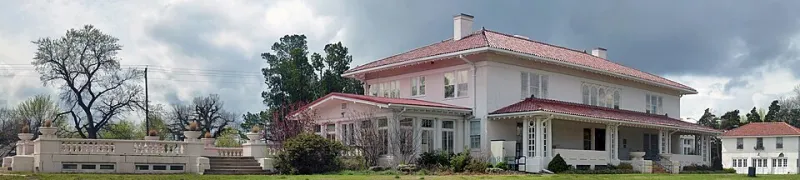
Photo: Thomas C. Gray, Public domain, via Wikimedia Commons
There is a peculiar thing that happens on a Saturday morning in June. Half the block is out there pushing a mower across a lawn nobody uses, in front of a house they already pay too much for, in a yard that will need mowing again in five days. We have collectively decided that this is normal. It is not. It is a habit dressed up as a standard.
I am not here to shame anyone's lawn. I am here to point out that the perfect rectangle of turf is a mid-century marketing artifact, that it is getting more expensive every year, and that a growing number of homeowners have quietly discovered the front yard can be something better — a place where people actually stop and talk.
How the putting green became mandatory
Postwar subdivisions came with an ideological bonus: the lawn was a symbol of order, permanence, and good citizenship. Seed companies and chemical manufacturers built an entire advertising apparatus around it, and by the 1960s the mowed rectangle had become a social obligation rather than a choice. Municipal codes and HOA covenants hardened it into a rule.
None of that was inevitable. It was a taste, backed by marketing, codified into policy. Tastes change.
The bill nobody itemizes
The lawn does not send you an invoice, so it is easy to miss the total. Add it up honestly for one season: water, fertilizer, weed control, gas, equipment depreciation, replacement sod after a bad heat wave, and the hours. Now add the years when you were traveling, injured, or simply not in the mood, and paid someone else to do it.
In the dry stretches of the West and Southwest, water is the loudest line item. But even in the humid East and Midwest, the lawn consumes time in a way that is genuinely hard to justify against a yard you look at from the kitchen window and never touch.
The HOA problem, and the loophole most people miss
This is the real friction point. Plenty of homeowners would rip out the turf tomorrow if they could. Before you do anything, read your covenants. Actually read them — the landscaping section, the definitions section, and any language about approved plant lists.
A few things worth knowing. Many states in recent years have passed laws limiting how far HOAs can go in banning drought-tolerant or water-wise landscaping; the details vary enormously, and enforcement is uneven. Some covenants regulate turf percentage, not plant type. And a surprising number of boards will approve a well-presented plan that a frustrated homeowner never thought to submit. If you want to change the front yard, come with a drawing, a plant list, and a maintenance schedule. Boards approve plans. They resist surprises.
The quiet social rules — and why they matter
Here is the part that native-plant advocates often get wrong. Neighbors are not reacting to the absence of grass. They are reacting to ambiguity. A yard that looks abandoned reads as a problem, even if it is a thriving ecosystem.
The research on this is fairly consistent: people accept unconventional landscapes when they see visible evidence of care. Cues to care. A clean edge between bed and path. A mowed strip or a crisp border along the sidewalk. A birdbath, a bench, a clear front walk, a single tidy specimen tree. Structure is the signal.
So the conversion is not really about removing the lawn. It is about replacing the lawn's signals of stewardship with better ones.
A three-year path that does not annoy the whole block
Year one: shrink, don't erase. Kill or sheet-mulch the hardest-to-mow corners and the strip along the driveway. Add a defined bed edge. Keep a deliberate area of turf in front for now. Plant three inexpensive, sturdy perennials you can actually keep alive.
Year two: go native where it counts. Choose species native to your region and matched to your light and drainage. Talk to a local extension office or native plant society; the big-box plant tags are rarely honest about what thrives where you live. Group plants in drifts rather than scattering them, and repeat the same three or four species — repetition reads as design rather than chaos.
Year three: the hardscape and the final cut. Add a path, a bench, or a low wall. Reduce turf to a purposeful shape. If you want to go fully lawn-free, use a low groundcover or a regional grass that needs mowing twice a season rather than twenty times.
What about small yards, rentals, and tight budgets?
Container plantings along a walkway do most of the visual work for a couple hundred dollars. A single tree, planted properly, is the highest-value addition to any front yard. Renters can negotiate with a landlord, or start with pots and a window box — and honestly, a renter with a plan often gets a yes.
The front yard as a public room
What strikes me most about the neighborhoods I love is not their lawns. It is the presence of chairs. A bench near the sidewalk. A path that curves toward the door. A planter someone has to water by hand. Those are invitations, and they change how a street feels.
The perfect lawn has been sold to us as the price of belonging. It was never a very good deal. A front yard that asks less of you and gives more to the block — that is an upgrade worth mowing a little less for.