From Solo to Shared: Redesigning Your Home (and Your Habits) When Someone Else Moves In
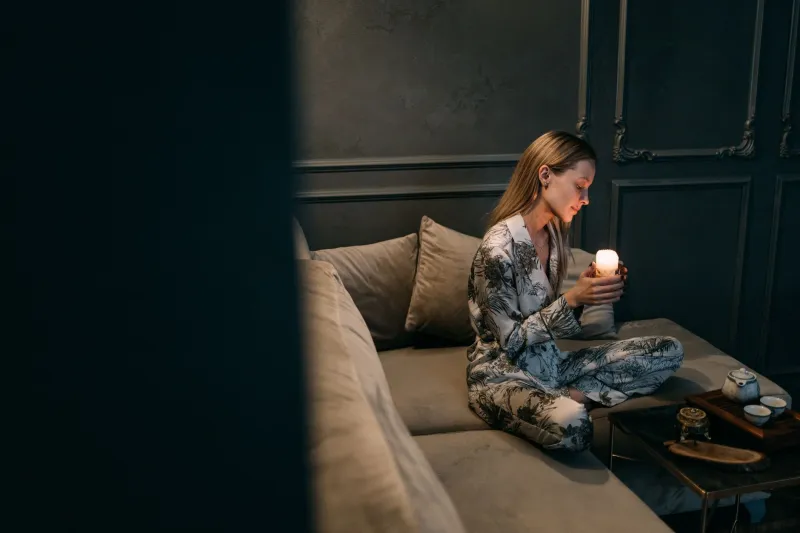
There's a particular kind of freedom that comes with living alone. Your couch goes exactly where you want it. The kitchen stays organized your way. Nobody moves your stuff, questions your throw pillow choices, or leaves dishes in the sink. It's your space, full stop.
Then someone new comes into the picture — a partner, a best friend, a parent, a sibling — and suddenly that carefully curated environment has to stretch to accommodate another human being with their own tastes, routines, and, yes, belongings. Welcome to what a lot of home lovers quietly call the roommate effect: the cascade of changes — big and small — that ripples through a home the moment it goes from a solo act to a shared experience.
It's not always pretty at first. But with some intentional planning and a willingness to compromise, it can actually make your home better.
Why Solo Living Sets Such a High Bar
When you've had a place to yourself for any significant stretch of time, you don't just develop preferences — you develop deeply ingrained habits around your space. Maybe your living room doubles as your home office, your gym, and your Sunday morning reading nook. Maybe the kitchen counter layout is a system only you fully understand. Maybe you've got a very specific thing going on with your bedroom lighting that took two years to perfect.
Solo living quietly turns us into control freaks about our environments, and that's not necessarily a bad thing. It means we've gotten to know ourselves as homeowners. The challenge is that when a second person moves in, they bring an entirely different set of learned behaviors and aesthetic instincts — and neither person is wrong.
The friction that follows isn't really about whose lamp is uglier. It's about identity, comfort, and what home means to each of you.
The Merging Problem Nobody Talks About
Most people focus on the practical stuff when combining households: figuring out whose dining table survives the move, what to do with duplicate appliances, where to fit two wardrobes into one closet. Those are real challenges, but they're actually the easier ones to solve. Craigslist and a storage unit can handle duplicate furniture.
The harder conversation is about aesthetic compatibility. When one person leans minimalist and the other is a maximalist collector, or when one person's color palette runs earthy and neutral while the other loves bold, saturated tones, no amount of decluttering fixes that tension. You're essentially negotiating two distinct design identities into one coherent visual language.
And then there's the invisible stuff — the routines and rituals that define how each person uses their home. Night owls versus early risers. Social butterflies who love hosting versus homebodies who treat the house as a sanctuary. Someone who needs a dedicated workspace versus someone who can work from the couch. These differences shape how a home needs to function, not just how it looks.
Zone It Out: The Case for Defined Personal Spaces
One of the most effective strategies for making a shared home actually work is intentional zoning — carving out spaces within the home that belong distinctly to each person, even in a small square footage situation.
This doesn't mean building walls. It means being deliberate. A reading corner with your chair, your lamp, and your bookshelf. A workspace that reflects one person's organizational style without compromise. A bathroom shelf that's yours and yours alone. These micro-territories serve a real psychological function: they give each person a place to exhale and feel like themselves, even in a home they're now sharing.
For couples especially, this kind of intentional space-making can actually reduce conflict elsewhere in the home. When you each have somewhere that feels fully yours, the shared spaces feel less like contested ground and more like neutral — even joyful — territory.
Negotiating the Shared Aesthetic (Without a Coin Flip)
Here's the thing about merging two design visions: compromise doesn't have to mean beige. Some of the most interesting, layered home interiors come out of exactly this kind of creative tension.
A few approaches that actually work:
Start with the bones, not the accessories. Agree on foundational decisions first — flooring, wall color, major furniture pieces — and leave room for each person's personality to show up in the details. A shared neutral sofa can coexist beautifully with one person's gallery wall and another person's vintage side table.
Assign rooms. Give each person primary creative ownership of at least one space in the home. Maybe one person takes the lead on the living room, the other on the bedroom. This creates a sense of agency without turning every design decision into a negotiation.
Look for the overlap. Before defaulting to compromise, spend some time identifying where your styles actually do align. Most people have more design common ground than they initially realize. Build from that shared foundation outward.
Let go of the duplicates strategically. When you both own a version of something, don't automatically keep the newer one. Keep the one that fits the space better, or the one with more sentimental weight. Then sell or donate the other — and maybe put that money toward something new you both choose together.
Storage Is Where Relationships Go to Get Tested
No conversation about moving in together is complete without acknowledging the storage situation. Shared homes almost always involve more stuff than the space was originally designed to handle, and storage conflicts are one of the most consistent sources of friction in newly shared households.
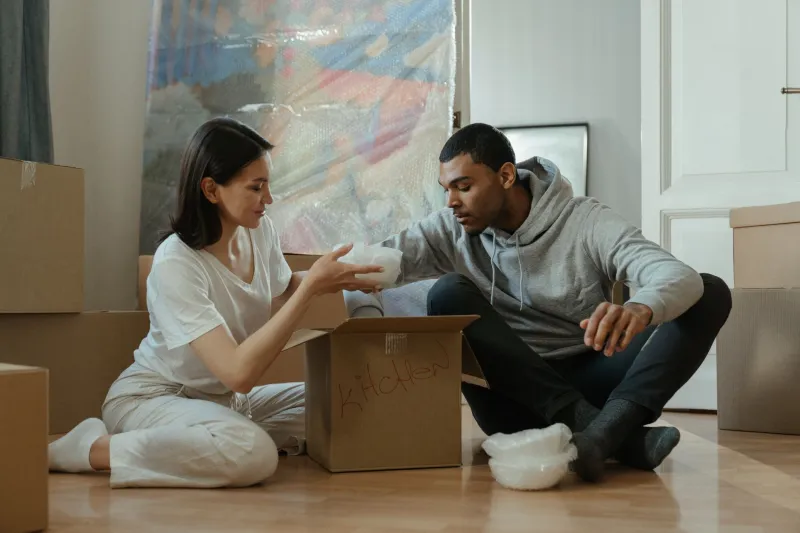
Before the boxes arrive, do a full audit of your storage capacity — closets, cabinets, garage space, under-bed clearance, everything. Then have an honest conversation about what's coming in and what needs to go. This is not the time for sentimentality about things that genuinely don't fit.
For homes where storage is genuinely limited, built-ins and multifunctional furniture can be a game-changer. A window seat with storage underneath, a bed frame with deep drawers, a coffee table with a lift top — these kinds of investments pay off in livability dividends, especially in smaller spaces.
Hosting Together: A New Social Dynamic
If one person was a frequent host and the other wasn't, moving in together reshapes your social life in ways that directly affect how your home needs to function. Suddenly you're negotiating guest policies, entertaining styles, and the question of whether the living room layout should optimize for conversation or for the TV.
Talk about it early. How often do you each expect to have people over? Are big gatherings something you both enjoy, or does one of you find them draining? What does a typical Friday night look like? These conversations aren't just about scheduling — they're about designing a home that supports the life you're both actually trying to live.
The Bigger Picture
At its core, the roommate effect is really about identity negotiation. Your home is one of the most personal expressions of who you are, and sharing it means opening that expression up to collaboration. That can feel like loss at first — and sometimes it genuinely is a loss, at least of the frictionless solo existence you'd gotten used to.
But it can also be something else entirely: a chance to build a home that's richer, more layered, and more alive than anything you'd have created on your own. The homes that feel the most lived-in, the most real, tend to be the ones where more than one person's story is showing up in the walls.
That's worth a little negotiation.