Who Are You, Really? A Homeowner's Guide to Uncovering Your Authentic Design Identity
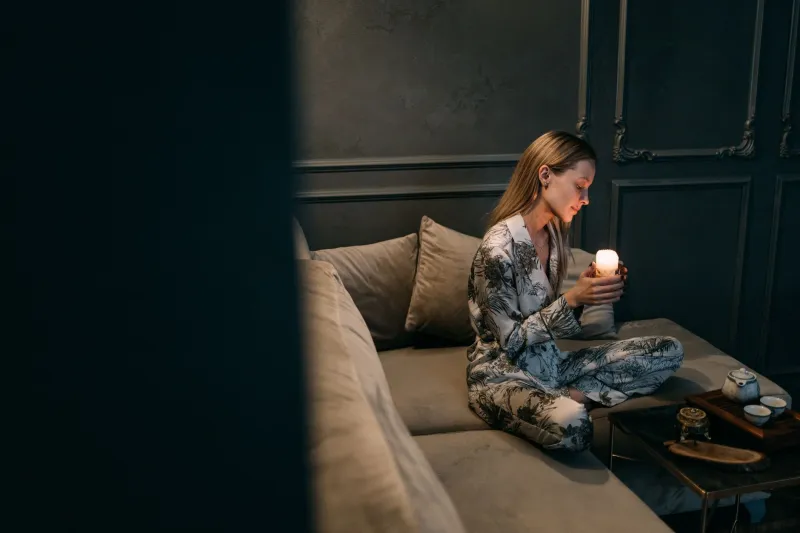
Let's be honest: most of us have decorated our homes at least partially for other people. Maybe it was to impress guests, satisfy a partner's preferences, or simply because a certain look was everywhere online and it just felt easier to go with the flow. But at some point — usually when you're standing in your own living room and something feels vaguely wrong — you realize the space doesn't really feel like you.
The good news? That feeling is actually useful. It means your instincts are trying to tell you something. And if you're willing to slow down and listen, you can strip away all the noise and figure out what you actually love.
This isn't about finding the next big trend to latch onto. It's about doing a genuine design identity check — what we like to call an authenticity audit.
Why Trends Are the Enemy of Personal Style
Trends exist for a reason. They reflect a cultural moment, a collective mood, a shared aesthetic hunger. And there's nothing wrong with appreciating them. But there's a big difference between a trend that resonates with who you are and one you're chasing because everyone else is.
Right now, homes across America are full of sage green cabinets, arched doorways, and bouclé furniture. Some of those homeowners genuinely love that look. But plenty of others are already quietly wondering if they made a mistake — because the aesthetic they borrowed from social media doesn't actually match the life they're living inside it.
The problem with trend-chasing is that it creates homes that feel dated fast and personal never. When you design around who you genuinely are, your home stays relevant to your life regardless of what's cycling through design blogs.
Step One: Go Back Before You Go Forward
One of the most revealing exercises you can do is think about the spaces that made you feel most at home as a kid — not necessarily the house you grew up in, but any environment that gave you that deep-exhale feeling of comfort and belonging.
Was it a grandparent's house with warm wood paneling and shelves full of interesting objects? A friend's place that always smelled like something good cooking and had mismatched furniture that somehow worked? A cabin in the woods? A bright, sunny apartment with white walls and almost nothing on them?
Write it down. Don't edit yourself. What textures do you remember? What was the light like? Was it cozy or open? Busy or spare? These memories carry real design DNA that's specific to you.
Step Two: Mine Your Travel Memories
Travel is another surprisingly rich source of authentic design preference. Think about the places you've visited — hotels, Airbnbs, restaurants, even just neighborhoods you wandered through — where you thought, I could actually live here.
Maybe it was a boutique hotel in New Orleans with exposed brick and moody lighting. Maybe it was a clean, minimalist vacation rental in the Pacific Northwest where every item felt intentional. Maybe it was a colorful, pattern-heavy guesthouse in the Southwest that made you feel inexplicably alive.
These reactions aren't random. They're data. When a space makes you feel something viscerally positive, pay attention to why. Is it the scale of the rooms? The color palette? The way natural light moves through the space? The mix of old and new? Get specific.
Step Three: Audit What You Already Own
Here's a surprisingly effective trick: walk through your home and identify the three things you love most — the objects, pieces of furniture, or corners that genuinely make you happy when you look at them. Then ask yourself what they have in common.
Maybe they're all vintage. Maybe they all have a handmade quality. Maybe they're all a similar color family you never consciously chose. Maybe they all have a story attached to them.
Now do the reverse: find the things that feel wrong, that you keep meaning to replace, that you never quite liked but kept anyway. What do those have in common? Chances are, they were trend purchases or obligatory additions that never really belonged to you.
This contrast tells you a lot about where your authentic preferences actually live.
Step Four: Stop Asking What Looks Good and Start Asking What Feels Good
Design conversations tend to focus heavily on visual appeal. Does it look good? Is it photogenic? Will guests notice it? But the most livable, personally satisfying homes are built around feeling, not appearance.
Ask yourself: Do I want to feel calm when I walk in, or energized? Do I want my home to feel like a retreat from the world, or an extension of my social life? Do I want warmth and texture, or clean lines and breathing room?
These aren't aesthetic questions — they're lifestyle questions. And they should be driving your design decisions far more than whatever's trending on social media this month.
Step Five: Give Yourself Permission to Be Inconsistent
Here's something the design world doesn't say enough: your home doesn't have to have a single, perfectly coherent aesthetic. Real people are complicated, and the spaces they love tend to reflect that.
Maybe you love a very spare, modern kitchen but want your bedroom to feel like a cozy, maximalist nest. Maybe your living room leans traditional while your home office is pure mid-century modern. That's not a contradiction — that's personality.
What matters is that each space feels intentional and true to how you use it and how you want to feel in it. Forced coherence in service of a Pinterest-worthy grid often produces homes that photograph beautifully but feel hollow to actually live in.
Building Your Design Philosophy (Without a Mood Board)
Once you've done this internal work, try putting your findings into a few plain-language sentences rather than a mood board. Something like: "I want my home to feel warm and layered, with a mix of old and new things that have meaning to me. I'm drawn to natural materials and earthy colors. I want it to feel lived-in and comfortable, not pristine."
That simple statement becomes your filter. Every future purchase, every paint color decision, every furniture choice gets run through it. Does this fit? Does it move me closer to the home I actually want, or am I just reacting to something I saw online?
The Bottom Line
Your home is one of the few places in the world you get to design entirely around yourself. That's a remarkable opportunity — and it's one that gets wasted when you fill the space with other people's visions instead of your own.
The authenticity audit isn't a one-time exercise. It's an ongoing practice of checking in with yourself, questioning your impulses, and making sure the home you're building actually reflects the person living in it. When you get that right, no trend can touch it.