Old House, Big Price Tag: The Real Cost of Falling in Love with Vintage Charm
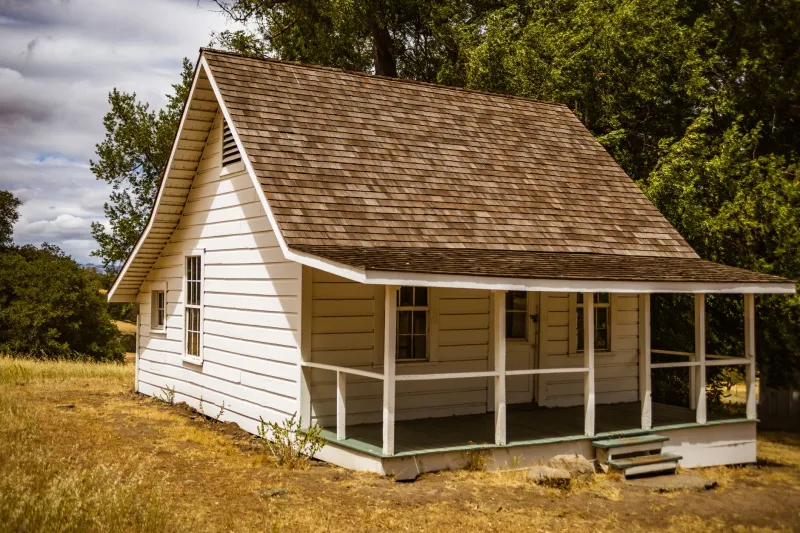
There's a moment every vintage home buyer knows. You walk through the front door, see the original hardwood floors glowing in the afternoon light, run your hand along a built-in bookcase that someone crafted by hand decades ago, and suddenly — the inspection report feels like a minor detail. The knob-and-tube wiring? We'll figure it out. The single-pane windows? Character.
This is what we call the nostalgia tax. And a lot of us pay it willingly.
But if you're seriously considering a pre-1980s home — whether it's a Victorian in San Francisco, a Craftsman bungalow in the Midwest, or a mid-century ranch in the suburbs — it's worth slowing down and getting honest about what you're actually buying. Because the charm is real, but so are the costs.
Why Older Homes Command Premium Prices in the First Place
It might seem counterintuitive. Shouldn't a newer home with updated systems, fresh construction, and modern energy efficiency cost more than something built in 1935? In many markets, the opposite is true.
Older homes in established neighborhoods often sit on larger lots. They were built before zoning laws squeezed parcels down to postage stamps. The neighborhoods themselves tend to be walkable, tree-lined, and close to city centers — all things that modern buyers are willing to pay a serious premium for.
Beyond location, there's craftsmanship. Pre-war construction often used old-growth lumber, which is denser and more durable than most of what you'll find in new builds. Plaster walls, solid wood doors, hand-laid tile — these details are genuinely harder to replicate today, and buyers know it.
And then there's the intangible stuff: the feeling that a place has a story. In a market flooded with identical gray-and-white new construction, a home with actual architectural personality stands out. Buyers pay for that feeling. Sometimes a lot.
The Psychology Behind the Pull
Researchers who study consumer behavior have long noted that humans are wired to attach meaning to objects that feel old, rare, or handmade. It's the same impulse that drives people to buy vintage furniture, vinyl records, or antique jewelry. We associate age with authenticity, and authenticity with value.
For home buyers, this gets layered with nostalgia — either for a specific era they lived through, or for a romanticized version of the past they've absorbed through movies, design blogs, and their grandmother's kitchen. There's comfort in a home that feels like it has already survived something.
This emotional pull is powerful enough to make smart, financially savvy people overlook some pretty significant red flags. And that's not a character flaw — it's just human. The key is knowing it's happening so you can balance it with clear-eyed thinking.
What You're Actually Signing Up For: The Lifetime Cost Reality
Let's talk numbers, because this is where the nostalgia tax really shows up.
A home built before 1980 comes with a checklist of potential upgrades that can add up fast:
- Electrical systems: Many older homes still have outdated wiring. A full rewire can run anywhere from $8,000 to $20,000 depending on the size of the home.
- Plumbing: Galvanized steel pipes corrode over time. Replacing them throughout a house can cost $5,000 to $15,000.
- Insulation and energy efficiency: Older homes were not built with energy costs in mind. Expect higher utility bills and potential costs to add insulation, replace windows, or upgrade your HVAC.
- Roof and foundation: These big-ticket items don't care how charming your crown molding is. A roof replacement averages $10,000 to $25,000. Foundation work can push well beyond that.
- Lead paint and asbestos: Homes built before 1978 may contain lead paint. Homes built before the mid-1980s may have asbestos insulation or tile. Testing and remediation are additional costs that buyers sometimes forget to factor in.
None of this means a vintage home is a bad buy. But it does mean you need to budget differently. Most financial advisors recommend setting aside 1–2% of a home's value annually for maintenance. For older homes, many experts push that to 2–4%. On a $400,000 home, that's $8,000 to $16,000 per year — money that needs to be sitting somewhere accessible.
When the Character Actually Pays Off
Here's the flip side: in the right market, a well-maintained vintage home can be an exceptional long-term investment.
Historic districts and established neighborhoods tend to hold their value remarkably well. They attract buyers who aren't just looking for square footage — they're looking for a specific lifestyle and aesthetic. That means your buyer pool, when it comes time to sell, is often motivated and emotionally invested.
If you're willing to put in the work — or budget for the right contractors — restoring a vintage home can also result in something genuinely irreplaceable. A renovated 1920s Craftsman with updated systems but preserved original details will often out-appraise a similar-sized new build in the same zip code.
The key phrase there is updated systems. The homes that become money pits are usually the ones where buyers fell in love with the aesthetic and neglected the infrastructure. The ones that become great investments are the ones where buyers treated the systems as non-negotiable and the aesthetics as a bonus.
How to Decide If a Vintage Home Is Right for You
Before you make an offer on that 1940s Tudor with the arched doorways and the original kitchen tile, run through these questions honestly:
1. Can you afford the inspection — and everything it might uncover? Don't skip the inspection, and don't hire the cheapest inspector you can find. For older homes, consider a specialist. The few hundred dollars extra is worth it.
2. Do you have a realistic renovation budget? Not a hopeful one. A realistic one. Get quotes from local contractors before you close, not after.
3. Are you buying in a neighborhood with strong comps for renovated older homes? The market has to support your investment for any of this to make financial sense. Talk to a local agent who knows the neighborhood's sales history.
4. Are you prepared for the ongoing maintenance rhythm? Older homes require more attention, more frequently. If that sounds exhausting rather than satisfying, a newer home might genuinely be a better fit for your life.
5. What's your timeline? Vintage homes tend to reward long-term owners. If you're planning to move in five years, the math gets harder to make work.
The Bottom Line
Falling for a vintage home isn't irrational — it's actually pretty understandable. These homes offer something that new construction genuinely struggles to replicate: a sense of place, permanence, and craftsmanship that you can feel the moment you walk in.
But loving an old house well means respecting what it actually is, not just what it looks like. The buyers who thrive in historic homes are the ones who go in with clear budgets, realistic timelines, and a genuine appreciation for the ongoing relationship that older homes require.
Pay the nostalgia tax if you want to. Just know what you're paying — and make sure you can afford it.